Showing posts with label Eucharist. Show all posts

Sunday, October 28, 2012

Fermentation

Proper 25
Readings: 


May those who go out weeping, carrying the seed, come again with joy shouldering their sheaves.

Jeremiah and the Psalm today are both talking about the same thing - when God's people return from exile. It was an unbelievable end to a horrific, long ordeal. To hear about it, read the first 28 chapters of Jeremiah.
It might be something like POWs coming home after years in captivity - or like this:


It's striking, some of the words that describe the people's joy in returning - a big mix of emotion:

"Sing aloud with gladness... and say 'Save, O Lord, your people...' With weeping they shall come, and with consolations I will lead them back..."

"When the Lord restored the fortunes of Zion, then was our mouth filled with laughter, and our tongue with shouts of joy"

One person's comments on this passage noted how the Psalmist describes his or her mouth "filled with laughter" - as if it burst out involuntarily. Has anything like this happened to you before? Not so much that you laugh, like you would at a joke, when you are planning on it, but - suddenly and unexpectedly - your mouth is filled with laughter?
In grief or pain, we're often not prepared for joy.

The opposite seems similar in a way. In a time of joy, the pain you have been experiencing but holding at bay to pace yourself suddenly erupts because that pain or separation may finally be ending. If you are familiar with Nelson and Winnie Mandela's story, you may realize that the picture above is not one of joy, simply, but that it's much more complicated. When joy suddenly appears, it carries with it everything that came before. I saw a video of a reunion between one of the Lost Boys of Sudan and his mother. She was so overwhelmed - it seemed like more emotion than her body could contain, and she fell on the floor weeping. Why? Wasn't she happy to see him? Of course, but there's a lot more to it... it's complicated.

Experiences of pain, grief, loss, suffering - these can crush us in ways that change us internally. We are not the same, so experiencing joy afterwards is also not the same - it can be a complex mixture of things - or something else not defined by the simple words we have.

This kind of complex mix of emotions is, I think, what Jeremiah is describing when the people will come back to their homeland after several generations in exile and captivity: shouts of joy, weeping, laughter, consolations...

Last time, I talked about the crumple zone of a car allowing for a controlled crush in a life-threatening crisis.
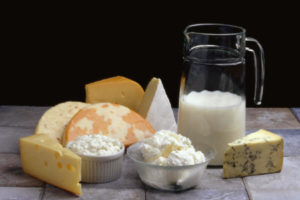
Another form of controlled destruction is the process of

fermentation.

How is cheese different from milk?


...kimchi or saurkraut from cabbage?

... wine from grapes?


Fermentation or pickling is a controlled process of decay that changes the nature of the food. Somewhat counter-intuitively, this controlled decay actually makes the food more stable - and in many ways is considered to enhance it.

However - it would not seem that way if you were the grape.

Imagine that you've blossomed out into the sun and started growing, soaking up gentle rain, becoming sweet and radiant.

Then a hand pulls you off the vine...
You're disconnected and disoriented. And the next thing you know, you're getting the guts stomped out of you...

Then it's into a barrel - locked away in the dark.
For YEARS
where it's silent and cold...

Making bread is also a controlled process of destruction and fermentation, but instead of going into the dark and cold, it's baked in a fire.
The grain is picked, crushed, even ground into powder sometimes. Then it is mixed with things and given as food for bacteria.
As it swells, it gets punched back down and then thrown in an oven.


If you are feeling like you're getting the life stomped out of you or shut up silently in a dark night of the soul - or you're being pounded and crushed, eaten from inside, and put through a fire, see if the metaphor of fermentation has any resonance for you.This may be a way you can ask God about it - whether the process of destruction you're experiencing is one of fermentation, one that he is in control of. If so, try to allow yourself to be changed, accepting that you can't go back.

This may also be a way to engage the gift of the Eucharist. Knowing what has to happen for grain to become bread and for fruit to become wine, what does it mean for Jesus to give us these gifts and say

"This is my body"

"This is my blood"

Sunday, October 03, 2010

Seeds


Lectionary Readings: Lamentations 1:1-6; Lam. 3:19-26;  2 Timothy 1:1-14;  Luke 17:5-10

How great is your faithfulness, O God! Amen.
Lord, increase our faith!
We don't know what we're doing. We need more people. We can't start yet - we're not ready. We need more information. We need more training, more experience, more money, more time...  Enough already!

That's what Jesus tells his disciples – you have enough already.
They say, "Give us more faith" – he says, "You've got all the faith you need – if you have this much, you've got more than enough" How much? The size of a mustard seed.

They're not very big, are they? Seeds themselves are not much to look at – small, nondescript, kind of dead-looking. You can't tell what a seed is going to grow into until you've had some experience. So unless you've seen that kind of seed before, you can't tell by looking at the outside what kind of plant it will become – and you can't tell by cutting it in half to look at the inside, either.
You have to put it in the ground and see what grows.

A lot of things are like seeds.

A baby is like a seed – I got to hold my little cousin Wyatt last week when he was only a few hours old. There's no way to know who he's going to grow up to be – you can't tell by looking; we'll have to wait till he starts growing to even begin to guess.

Faith is like a seed, too – in today's epistle, faith gets passed down in Timothy's family almost like DNA, from his grandmother to his mother to him. Faith gets planted in us at baptism and confirmation and all the sacraments – it's ready to germinate and grow when the conditions are right. Like it says in Timothy, "rekindle the gift of God that is within you through the laying on of… hands."

The words of scripture are like seed – sometimes called logos spermatikos – the implanted word. Every time somebody stands up here to read the Word of the Lord, you're peppered with little seeds. When and how they take root depends on lots of factors. If nothing is growing at all, you may need to condition your soil. The seed itself is good; when you create an environment conducive for it to take root, it will.

Experiences are seeds – even hard ones like pain and death. When the church was under so much persecution in the 300s and people were being killed left and right, Augustine wrote that the blood of the martyrs is the seed of the church – because that's what grew out of the deaths. The gospel also says that when a seed dies and falls to the ground, it grows up to produce 30, 60, a hundred fold return. What looks like the end of something is many times more of a beginning.So I think grief is closely connected to the growth of new and unexpected things. Grief sometimes involves digging up things that haven't been touched in a long while, pulling things out and turning the ground over and over and over, until it looks chewed up and bare – with bits of what used to be growing there poking out all over. This is what it sounds like in Lamentations – things look nothing like they used to
"How lonely sits the city that once was full of people! How like a widow she has become!"
I don't think grief itself is the seed; I think memories and experiences are. Relationships grow like flowers or trees, and when a person in your life dies, the blooms drop off, and you're left with stickers that poke you when you touch them or velcro things that grab onto you when you walk by, or delicate fluffy things that float away when you breathe on them. Your memories and experiences are like seeds. They're not what they were – but also, you have no idea what they might become.

A lot of things are like seeds.
On the outside, a seed looks dead. And basically, it is until it's put in the ground, but when conditions are right - the ground begins to warm, it receives water, suddenly the skin splits open, a root snakes out and a stem pushes up, unfolding a couple of green leaves

– and it turns out the inside of the seed is hundreds, thousands, millions of times bigger than the outside.

Even after all these centuries, it's still a process we can only describe, not really explain. You probably don't know what kinds of seeds you're carrying around – you can't tell by looking at them. And anyway, as seeds, they probably don't look very impressive, but what's inside is way more than you can guess. You need to put them in the ground. Ecclesiastes (11:6) says,Who plants a seed trusts God – maybe not even very much, but it doesn't take much. Do you still have the seed in your hand? Look at it. That's more than enough faith for God to work in you. Don't ask for more of this, more of that – the faith you have is enough; put something in the ground. You don't have to know what will grow from it, just start planting.
"in the morning sow your seed and at evening do not let your hands be idle; for you do not know which will prosper, this or that, or whether both alike will be good."


I love the story of Gideon; God asks him to save Israel and he says 'Oh I can't, my tribe is the smallest, and my family is the most insignificant of the clan, and I'm the youngest… blah blah blah… I can't do it!' and God says to him, "Go in the strength you have… Am I not sending you?"(Judges 6:14-16) In other words – do you think I'm asking you to do this by yourself? I'm right here.

The writer of Lamentations says to God,
"You are my portion…therefore I hope in you. You are good to those who wait with patience, to every soul that seeks you."
 God is with us, he is more than enough for all we need; he is our portion. He feeds us with his own life. The Eucharist is also like a seed; when you come to receive it today, think of it this way: you are planting the life of Christ in yourself; now wait patiently for it to grow.
And while you're waiting, go in the strength you have, with the faith you have – it's already enough, and plant your own seeds in the world around you.

Amen.

Thursday, February 21, 2008

Nicodemus - faith and reason

Year A, Lent 2
Readings: Genesis 12:1-4a Romans 4:1-5, 13-17 John 3:1-17 Psalm 121


The story of Nicodemus is fascinating to me. I think it describes what often happens when a logical, analytical mind encounters spiritual truth.
Nicodemus is trying to understand who Jesus is and where his power is coming from - because he figures it has to be from God, but how does that work, exactly?
He's sincere - he really wants to understand, "What is this relationship between body and soul? - between God and man?" but when Jesus answers him, Nicodemus finds the reply very confusing.
Jesus had said that, to see the kingdom of God, everyone needed to be 'born from above,' but that didn't make sense to Nicodemus. "How can anyone be born after having grown old?"
Jesus tells him. "What is born of the flesh is flesh, and what is born of the Spirit is spirit..."
That still didn't clarify it totally for Nicodemus, because his next comment is, "How can these things be?"
I find this conversation encouraging, because I think Nicodemus is an intelligent person, so if he's confused, I feel reassured that, when I'm confused about faith questions, it's not that I'm not smart enough, it's just that the answers really are hard to understand.

I also find it encouraging that, when Nicodemus says he's confused, Jesus works harder at explaining it. I'm grateful for people who have the courage and honesty to say when they don't understand something, even if it makes the teacher irritated, because usually then the teacher will say it again more clearly and maybe use some examples, and the result is that everybody understands better. Think how many people have come to understand God's purpose in sending Jesus to save humanity - which is what our faith hangs on - from the single verse of John 3:16 - part of Jesus' further clarification to Nicodemus. It's such a clear explanation. When I was little, we memorized it in Sunday school. You probably know it, too.
"For God so loved the world that he gave his only Son, so that everyone who believes in him may not perish but may have eternal life."

We can partly thank Nicodemus for that excellent summary because he asked the question.
Asking questions is, I think, an important foundation of scientific inquiry, and we've come up in a scientific, questioning age. Everything is being and has been questioned and examined, turned inside out, defined and re-defined - like we were trying to chart and re-map in specific details all the vagueness of the past, to take away the element of mystery that wrapped around everything in the medieval period. We don't want 'hocus pocus'; we want reality - something solid and definite to believe in.
Here's an interesting little piece of linguistic information about that word 'hocus pocus,' the way we talk about words or rituals that seem silly and pointless. "Hocus pocus...abbra cadabra, and Viola! Here's a bunny!"
But it's fake; it's a trick to make you think the magician has powers, but really he doesn't. He just knows how to make you look the other way at the right time.
During the Protestant Reformation, people were beginning to question what the rituals in church were all about, really. The service was all in Latin, and so people didn't know what was being said and mostly didn't understand what was being done, but at some point, the priest would say a particular thing, a bell would ring, and everyone was supposed to look, because the priest would hold up the bread, and that was how you received communion - that's how you received grace. The people who attended the service didn't actually take communion by eating the bread or drinking the wine; they received it by seeing it. So, if you weren't paying attention then, you could miss the main part of the service and seemingly it wouldn't do you any good. But some people started to wonder whether any of those things, which they didn't understand, were actually doing them any good anyway.
People had lost track of what all those things meant that the priest was doing and saying, and they started to question whether those things had any meaning at all. The words sounded like gibberish. When the priest held up the bread, he said (in Latin) "Hoc est corpus meum" - "This is my body." But most people didn't know Latin. So it's not suprising, really that when the priest said "Hoc est corpus meum" - and maybe the bells would drown out the 'meum' part, leaving just "Hoc est corpus..", it's understandible that what people heard was 'Hocus pocus,' - - and that came to have a meaning of its own related to how they felt about what they saw and heard in church. Maybe all these rituals and unintelligible words don't really have a meaning. It's just 'hocus pocus...'

People became dissatisfied with accepting things they didn't understand; they wanted reasons and answers.
Religion has reacted in different ways to this cultural shift of wanting to question everything - in many instances defensively, making it wrong to question issues of faith, which put a lot of people in the predicament of feeling they had to choose between thinking or believing. Some people were executed because of dilemmas like this. And some fought back, carrying out executions of their own and breaking all the things that smacked of mystery and 'hocus pocus' to get back to a 'true religion' based on reason and not meaningless movements and unintelligible words. But just because someone doesn't know the meaning or understand the words doesn't mean they don't have meaning - we have to be careful to balance our capacity for reason and desire for explanations with respect for what we don't understand.
As Fr. John and Fr. Jack discussed in the Lenten series class Wednesday night, "faith vs. reason" is a false dichotomy - that's just not how it is - God made us with the ability to reason. It's only right that we should use it - and the faithful use of gifts God gave us will not lead us away from God but toward God, even if the path seems to wind around.
And it has wound around quite a bit - even in the past 10-20 years, not to mention the past 100. Our culture has changed a lot in this questioning and exploration. One thing I think we're learning from this process is that we're not likely to ever understand it all. For every new thing we've learned this century, we've discovered whole areas of things we never dreamed about before - and each new thing is more beautiful, and complicated and amazing than we imagined. Remember what whole new worlds, literally, were opened up to our imaginations by the invention of the telescope and the microscope, for example, and more recently with quantum physics, genetics, and multi-dimensional math.

As we look for answers to our questions about life and the world, as we try to understand, God shows us new things, and each thing we understand is more amazing than we had imagined before... until I think eventually, more than answers to our questions about life and the world, we begin to want to know the God who made this world and gave us life.
In our class Wednesday night, talking about how the world began and why we're here, we had a big discussion about this relationship between faith and science. George Kondos made a comment about Einstein saying that science was trying to understand the mind of God. Einstein represents to many people the pinnacle of modern scientific thought - one of the most brilliant minds of all time - and his conclusion is that science is essentially a search to know God.
Isn't that really theology?
I love theology, and I think it's the highest of all fields to study, but I think even that is not where the journey of faith is leading. One of the most brilliant theologians of all time - St. Thomas Aquinas - after he had written tomes of material constituting a complex and beautiful systematic theology, one day completely stopped writing. Because, he said, something had happened while he was celebrating the Eucharist one day, and whatever that experience was, it made everything he ever wrote seem like 'so much straw.' Compared to what he'd been trying to describe in his theological writings, the reality was so much more amazing - so the thing to do then was worship, not write about it.
Our ability to reason and our desire to understand may be things God created in us, but they're tools, things to help us get to where we understand enough to worship, and at that point, the rest of it, as amazing and complicated and beautiful as it is, won't even be able to hold a candle to the one who made it. This may partly explain the stories why some people who meet Jesus just stop whatever they were doing to follow Him - even though not everybody does it immediately when they meet him, like some of the disciples did.
As I mentioned at the beginning, I love the story of Nicodemus, because it took him a while to work it out. Today's gospel reading is not the only place he shows up. Here, in this passage, we see the beginning of his journey - questioning, trying to understand who Jesus is and how he has access to God's power. Later, he comes up at Jesus' trial, trying to offer a voice of reason in Jesus' defense. Then, still later, he is one of those who come to take Jesus' body down from the cross, "bringing a mixture of myrrh and aloes.." - kind of like those wise men from the East, whose scientific inquiries led them to follow a star.
Nicodemus, a Pharisee who was diligently trying to observe and follow the law, started from a different place. While the magi started from science, Nicodemus started from religion, but they all found themselves on a journey of faith that ultimately led them to worship the God who made it all, who created the star, and who gave the law, and who sent his Son to show us how much God wants us to know him and be with him, because he made us and loves us, brains, questions, and all.


------------------------------------
Given to St. John's, Silsbee
Feb. 17, 2008